The Future of Real-Time Crime Centers (RTCCs): 7 Design Must-Haves for 2025
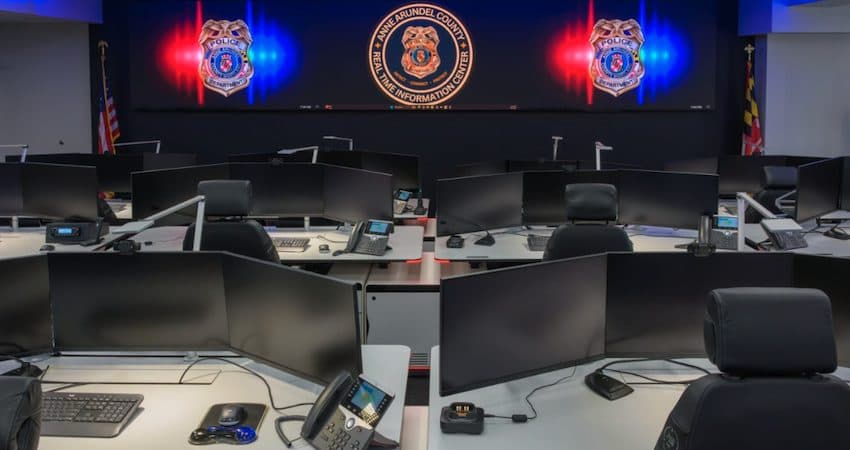
Introduction As law enforcement agencies continue to evolve, real-time crime center design is becoming the backbone of proactive policing. However, technology alone isn’t enough—creating a high-performance RTCC also requires mission-critical furniture, ergonomic layouts, and durable 24/7 operation. Here’s what every agency should consider in 2025 when building or upgrading its Real-Time Crime Center. 1. ISO 11064 …
July 28, 2025
Introduction
As law enforcement agencies continue to evolve, real-time crime center design is becoming the backbone of proactive policing. However, technology alone isn’t enough—creating a high-performance RTCC also requires mission-critical furniture, ergonomic layouts, and durable 24/7 operation.
Here’s what every agency should consider in 2025 when building or upgrading its Real-Time Crime Center.
1. ISO 11064 Ergonomics: Operator Comfort Saves Lives
An RTCC is only as effective as its operators. ISO 11064-certified consoles—like Fountainhead’s Elite AIR series—help reduce operator fatigue by supporting proper posture, height adjustability, and optimized screen viewing angles.
Why it Matters:
Fewer errors in mission-critical decisions
Lower staff turnover and injury rates
Proven productivity boost in 24/7 environments
2. Seamless Video Wall Integration
RTCCs thrive on real-time visualization. Integrated video wall technology—using partners like Datapath—allows operators to monitor multiple feeds simultaneously without distraction. This element is essential in modern real-time crime center design.
3. AI & Predictive Analytics Ready
The next generation of RTCCs will depend heavily on AI tools for license plate recognition, facial identification, and predictive policing. Designing a console layout that accommodates GPU-based servers and future tech is critical to staying ahead.
4. Flexible Console Configurations
RTCCs often need to adapt to new workflows quickly. Modular sit/stand consoles make reconfiguration fast and cost-effective—no major remodel required.
5. 24/7 Durability & Mission-Critical Materials
Unlike standard office desks, control room consoles are built for nonstop use. Scratch-resistant surfaces, thermal-resistant materials, and industrial-grade components are must-haves for any real-time crime center design.
6. Secure Cable Management & IT Accessibility
Clutter-free cable management is more than just an aesthetic choice. It ensures fast IT access and smoother maintenance, which is vital in time-sensitive environments.
7. Proven RTCC Design Expertise
Choosing a partner with real-world RTCC experience is key. Fountainhead’s recent project with the Dunwoody Police Department showcases how effective real-time crime center design combines ergonomics and technology to improve response times and increase community safety.
Conclusion
Whether you’re upgrading a dispatch center or launching a new RTCC, real-time crime center design plays a crucial role in mission success. The right setup supports your technology, enhances operator performance, and prepares your agency for future challenges.
✅ Ready to modernize your RTCC?
Request Your Free RTCC Design Consultation Now