NASA Hangar AE Mission Control Room Design
NASA Launch Services Program
At a Glance
Solution
Mission Control Center
Location
Cape Canaveral, Florida
Products Used
Custom Mission Control Consoles
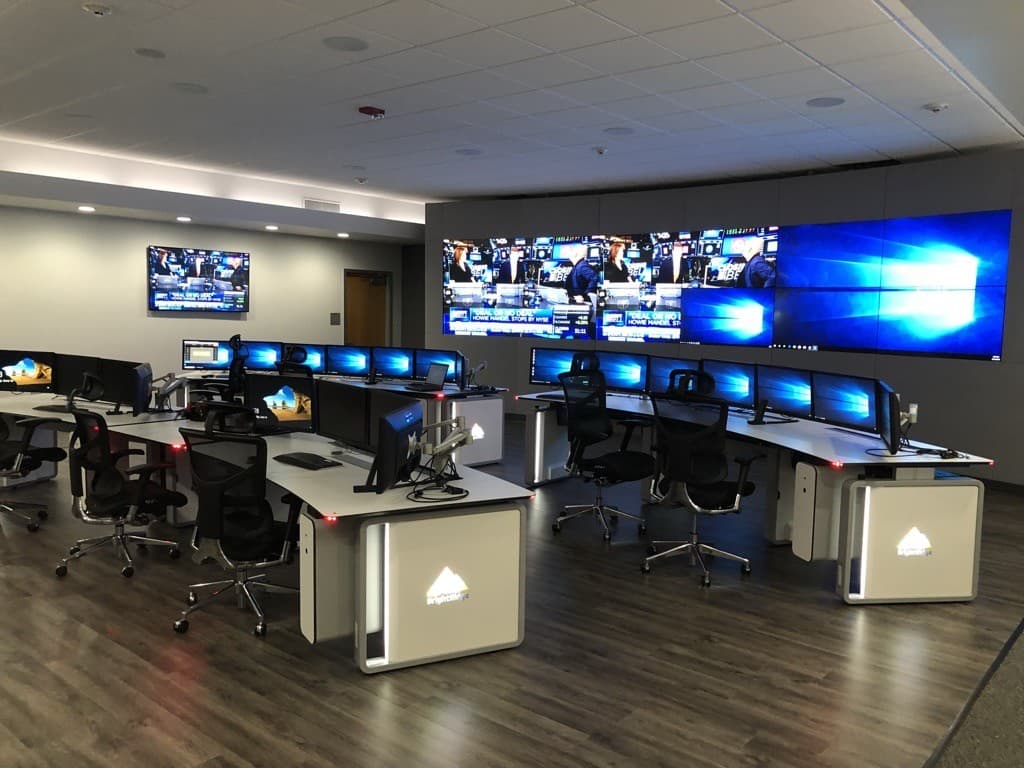
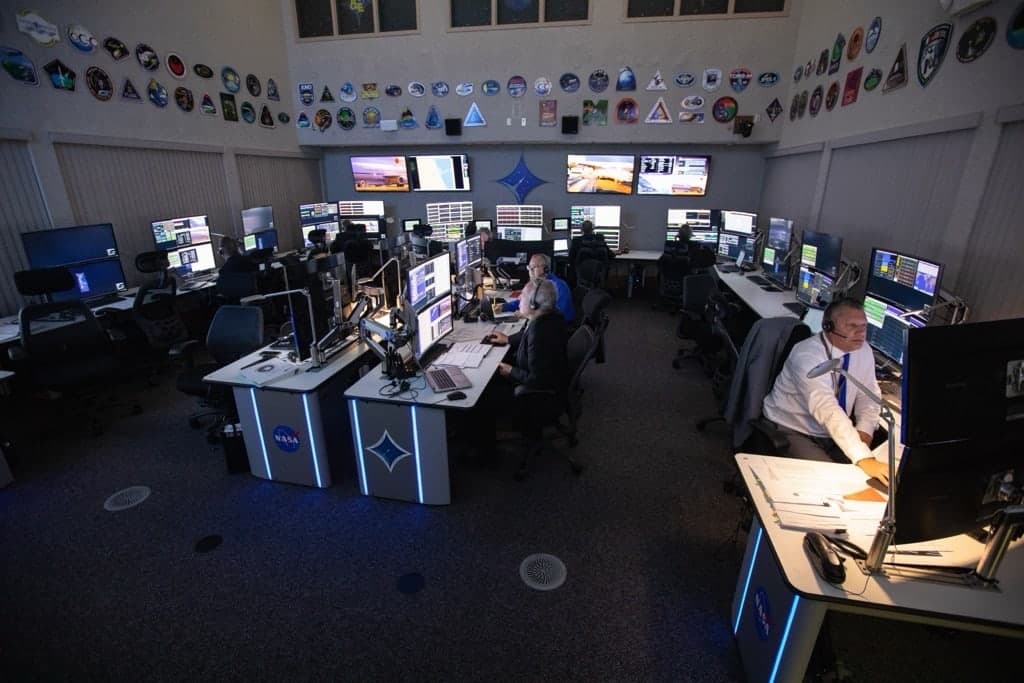
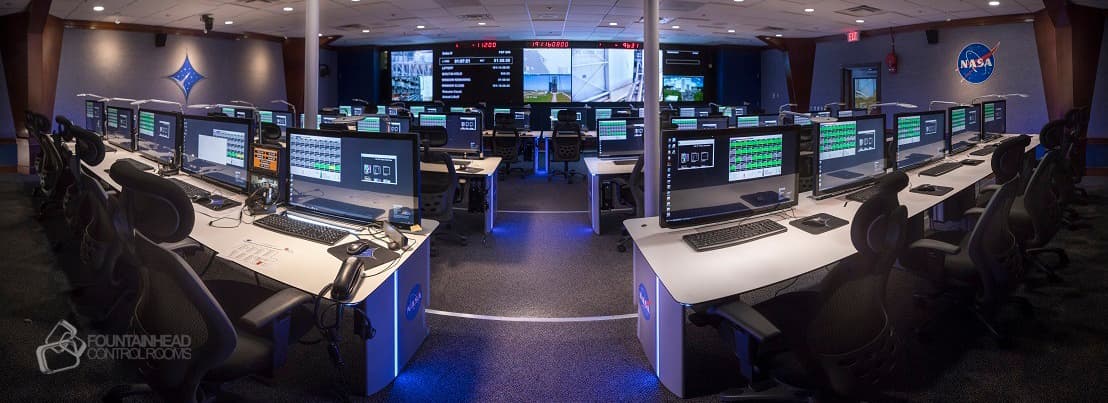
Fountainhead Control Rooms designed and built the mission control room environment inside NASA's historic Hangar AE at Cape Canaveral Space Force Station. The mission control room design supports NASA's Launch Services Program.
NASA Hangar AE Mission Control Room Overview
NASA's Launch Services Program (LSP) at Cape Canaveral Space Force Station required custom aerospace control room furniture for the historic Hangar AE facility. The facility supports uncrewed launch operations for NASA's most critical missions, including planetary exploration.
How Fountainhead Designed NASA's Hangar AE Control Rooms
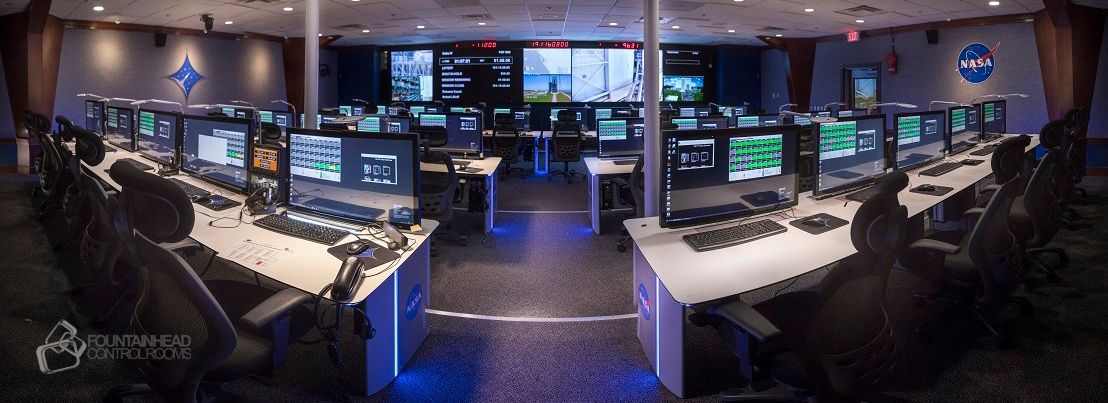
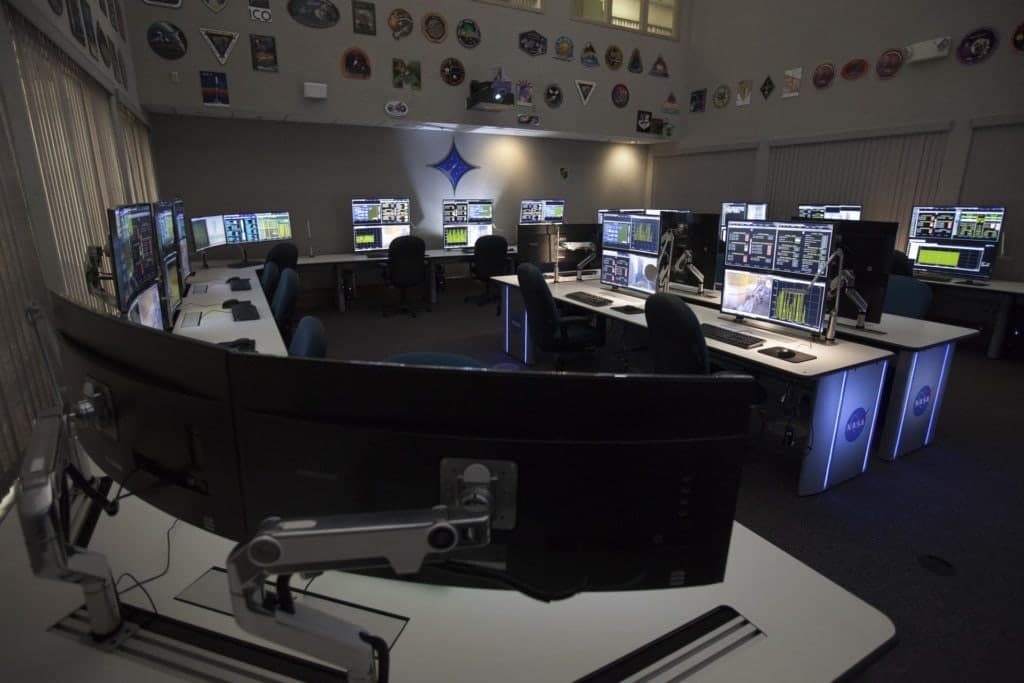
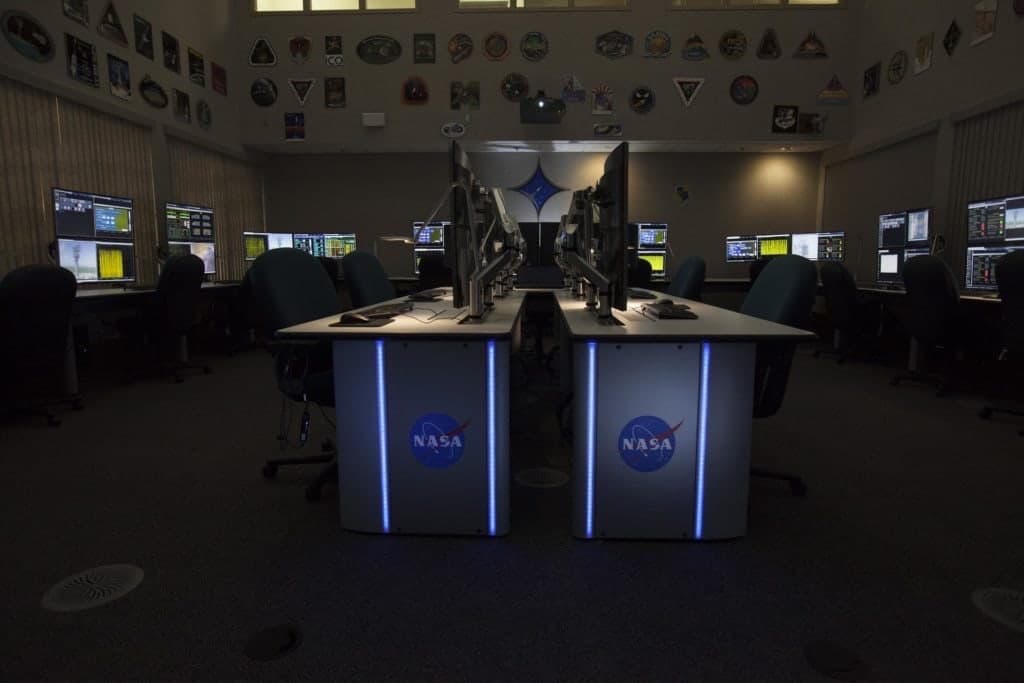
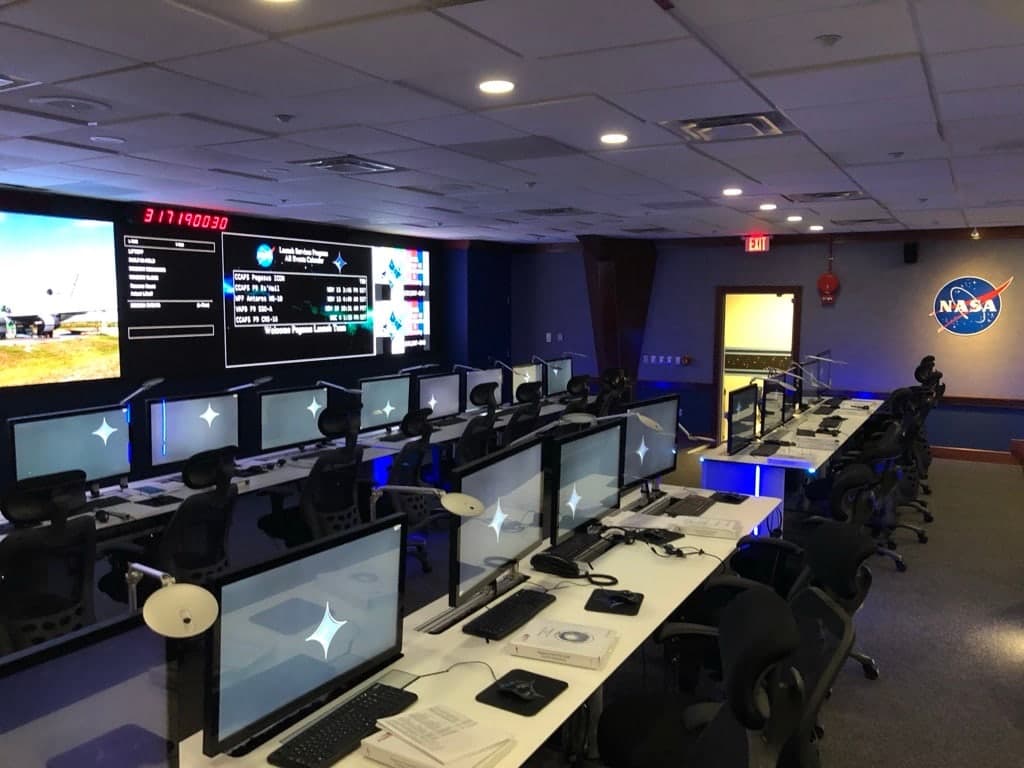
Fountainhead designed and built the mission-critical work environments within Hangar AE, including 41 custom control room consoles, integrated video wall systems,the Mission Director's Center and three Launch Vehicle Data Centers. The work centered on an operator-first principle: the physical environment should support the way launch teams actually work, not force every team into the same workstation model. Every element was engineered for 24/7 launch support while maintaining ISO 11064 compliance.
The project required a control room furniture solution and not just a furniture layout. Hangar AE is a multi-mission, multi-tenant environment where different teams need different views of the operation, different tools, and different ways to collaborate.
The Challenge: Mission Control Room Design for Complex Launch Operations
Real-time mission information moves through a highly connected launch-support environment at Hangar AE. Fountainhead Control Rooms designed the operator environments that help launch leadership, engineering teams, and operations personnel see critical information clearly, communicate efficiently, and stay focused through ground testing, countdown activities, and launch operations.
FCR's design approach began with understanding the needs each operational role:
Mission leadership needed a shared operational view and clear communication to support coordinated readiness and go/no-go decisions.
Engineering teams needed organized, configurable console space for telemetry, voice nets, video feeds, mission-specific tools, and technical analysis during extended operations.
Operations personnel needed workspaces that could accommodate changing equipment, staffing patterns, missions, launch vehicles, and stakeholder teams without disrupting the overall environment.
Public Affairs personnel needed dedicated seating within the mission-control environment to support communications during launch activity.
The result is a coordinated group of mission-critical control room environments that brings people, data, and decisions together in a space built for sustained launch support.
Read the full case study
Mission Director's Center
The Mission Director's Center, or MDC, serves as Hangar AE's executive decision environment. It supports senior launch managers and mission leadership as they oversee ground testing, assess vehicle readiness, and make final go/no-go decisions.
FCR designed the MDC with 41 ergonomic console positions, 34-inch ultra-high-definition monitors, a 32-foot mission video wall, and dedicated seating for Public Affairs Officers. The environment was planned to give leaders clear sightlines to shared mission information, efficient communication with participating teams, and a common operational picture when decisions matter most.
Rather than simply adding screens and workstations, the MDC design brings technical input from across the operation into one organized decision space. Launch leadership can monitor activity in real time, coordinate with launch-support organizations, and maintain visibility into the larger operation.
Launch Vehicle Data Centers
Fountainhead also created the operator-centered environments for Hangar AE's three Launch Vehicle Data Centers, or LVDCs. These engineering-focused control rooms support the detailed work behind launch readiness by giving teams a purpose-built setting for monitoring launch vehicle and spacecraft health through telemetry, voice networks, video feeds, and mission-specific tools.
The LVDCs were designed to support multiple operations in parallel or a single large launch operation. Each environment provides configurable console space for multiple displays, communications equipment, specialized input devices, and mission materials while helping teams maintain comfort, organization, and situational awareness through long shifts.
Together, the MDC and LVDCs demonstrate the difference between executive and engineering control room design. The MDC helps leadership see and coordinate the broader operation. The LVDCs give technical teams an organized, adaptable environment for detailed analysis and collaboration.
For FCR, that distinction is fundamental to mission-critical control room design: every space must be engineered around the people, decisions, technology, and workflows it is designed to support.
NASA Hangar AE Mission Control Results
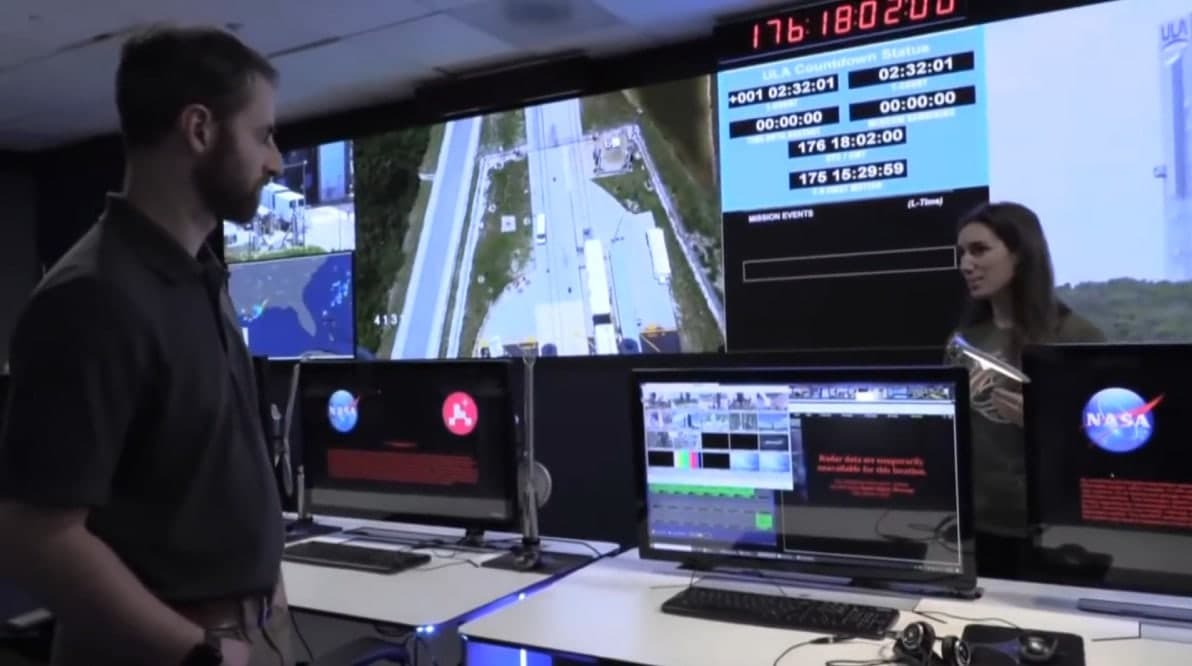
The Hangar AE control room environment has supported some of NASA's most important missions, including Mars 2020 and the deployment of the Perseverance rover. The flexible control room furniture system allows multiple launch providers to operate simultaneously, maximizing the facility's efficiency for America's space program.
Project Video
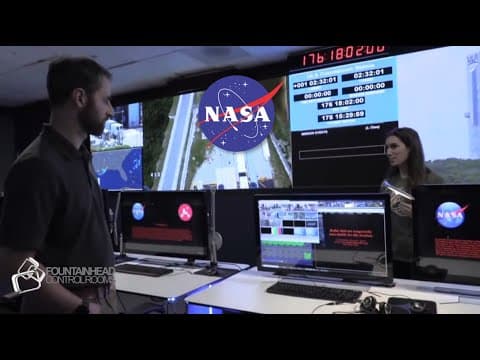
See It in Action
Project Gallery
Inside the Facility
Ready to Build Your Control Room?
Request a same-day consultation by calling us at 404.990.3748 or click below.