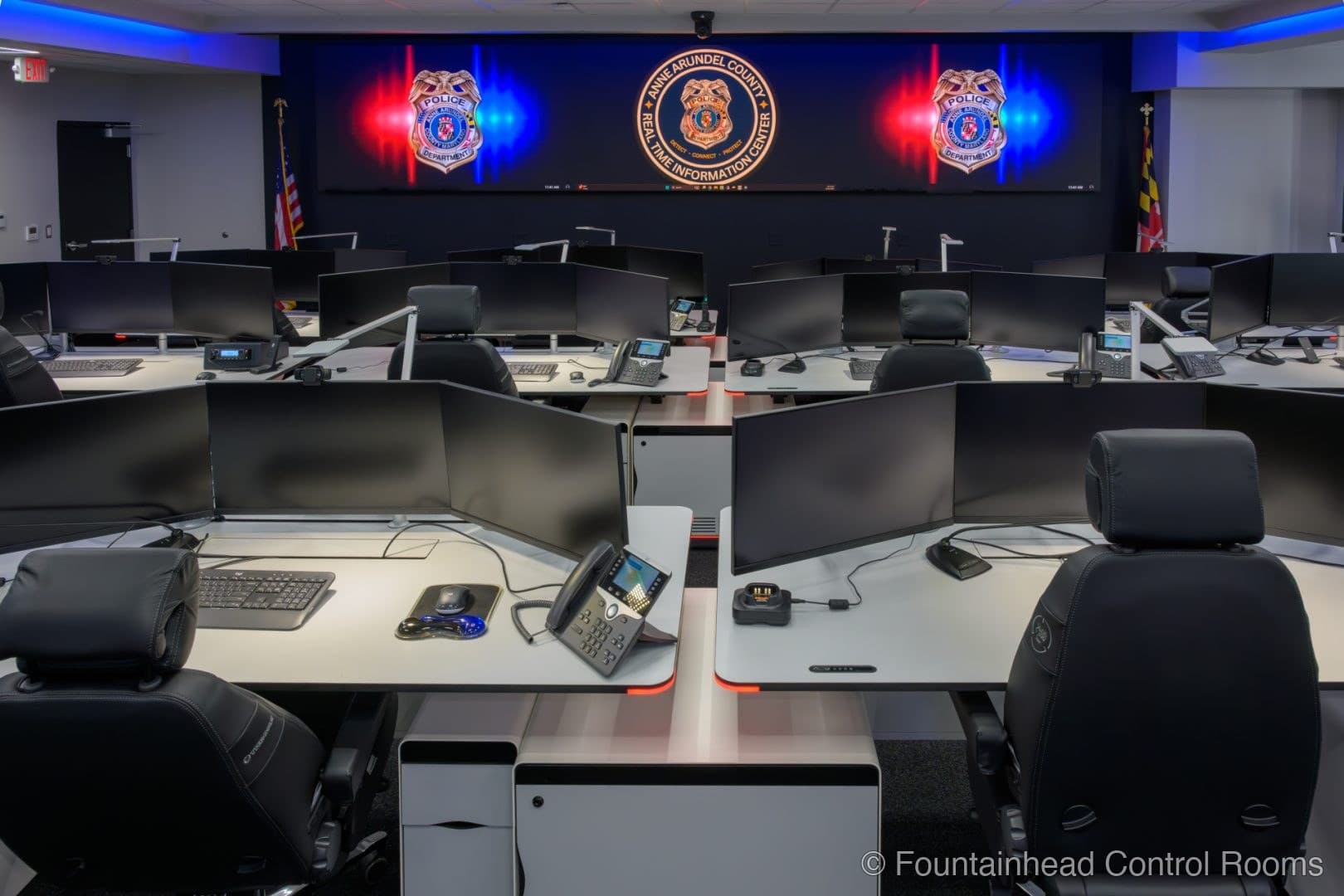
Anne Arundel Real Time Information Center: Turning Data Into Safer Streets
Anne Arundel County Police Department
At a Glance
Solution
Real-Time Information Center
Location
Anne Arundel County, Maryland
Products Used
24/7 Rated Operator Consoles, Technical Control Room Furniture, Integrated Video Wall
Anne Arundel Real Time Information Center Overview
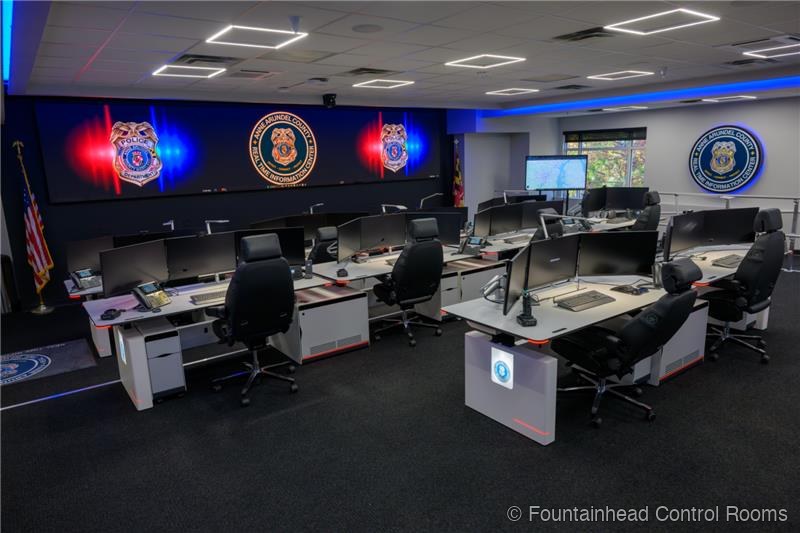
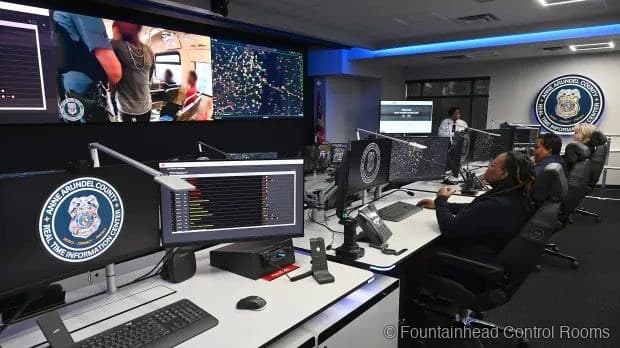
The Anne Arundel Real Time Information Center gives police analysts a centralized environment for monitoring live video, license plate data, emergency communications and investigative information across Anne Arundel County, Maryland. Fountainhead Control Rooms designed and installed the mission critical control environment, including the room layout, operator consoles, shared video wall and integrated AV systems. The RTIC helps analysts deliver timely intelligence to patrol officers, detectives and specialized units during unfolding incidents.Community context: A growing Chesapeake Bay County facing serious crime.
Community context: A growing Chesapeake Bay County facing serious crime
Anne Arundel County is a fast‑growing Chesapeake Bay community of more than 570,000 residents, known for its strong schools, diverse economy, and waterfront amenities. The county has also faced serious crimes, including homicides, carjackings and shootings. These challenges pushed leaders toward more data driven public safety strategies.
The Anne Arundel County Police Department wanted to bring live video, license plate data and investigative tools together in one place. This would allow analysts to support patrol officers, detectives and specialized units in real time. The result is the Real‑Time Information Center: a secure, mission‑critical hub that serves the entire county from a central location in Millersville, MD.
A real case: How the RTIC helped close a Glen Burnie stolen‑truck incident
During the RTIC’s pilot period in 2024, a pickup truck was stolen from a convenience store in Glen Burnie, Maryland. The suspect crashed into two vehicles and abandoned the truck. The suspect then met an accomplice, changed clothes in a restaurant and headed toward a nearby light rail station.
What the suspects didn’t know: analysts inside Anne Arundel County’s RTIC were following the entire sequence on live video.
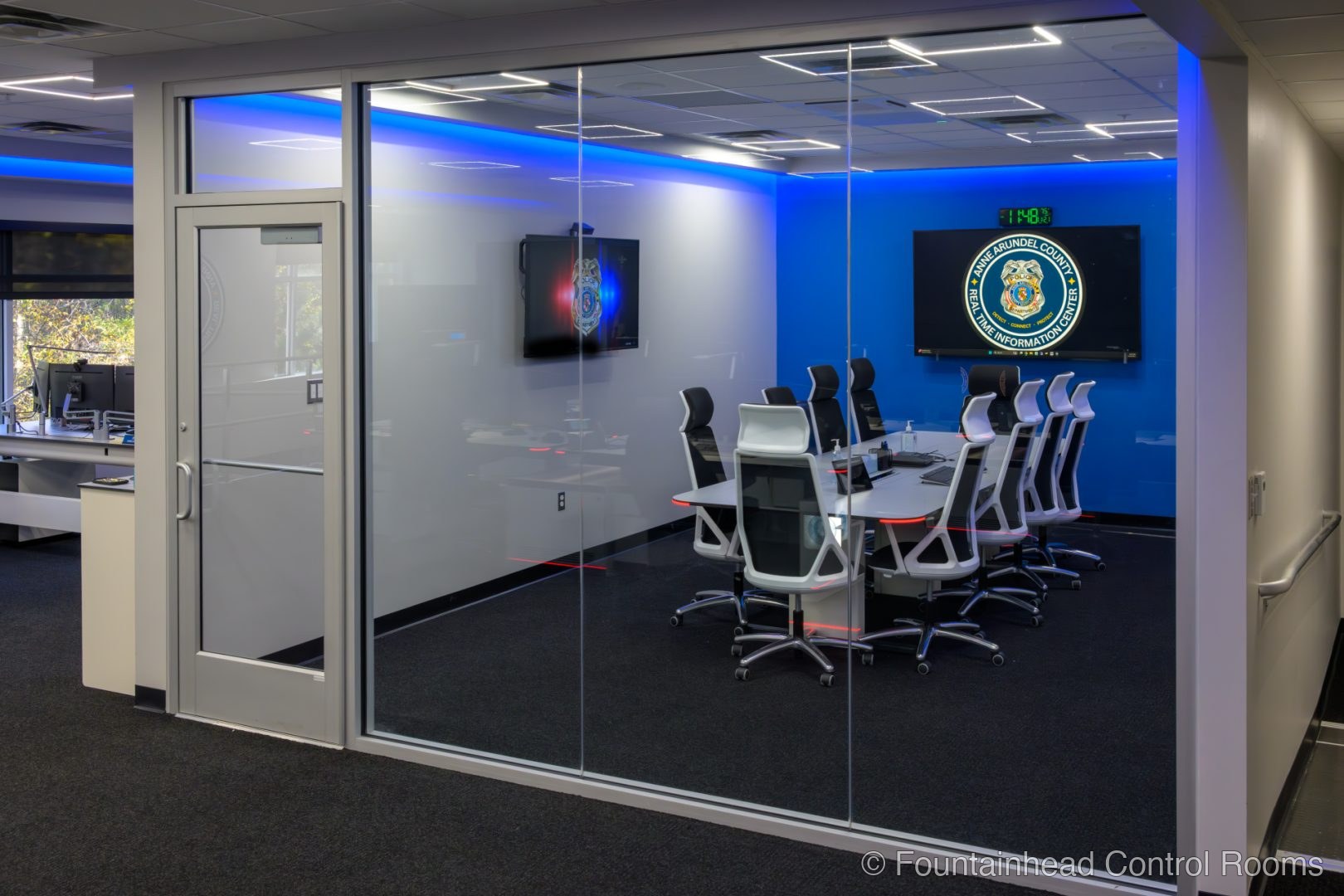
Working from the new control room environment, RTIC staff:
Tracked the truck and suspects across multiple camera feeds.
Coordinated detectives on the ground and a helicopter overhead.
Provided real‑time descriptions and movements so officers could make a safe, well‑timed arrest of both suspects without escalating risk to bystanders.
The Glen Burnie case became one of roughly 200 early incidents supported by the RTIC. The center provided critical information to officers before they arrived on scene, validating the county's investment before the official launch.
How Fountainhead Designed the Real Time Information Center
Anne Arundel County selected Fountainhead Control Rooms to design and deliver the RTIC's mission critical control environment. The goal was to create an effective visualization and operations hub for the facility.
Fountainhead’s scope included:
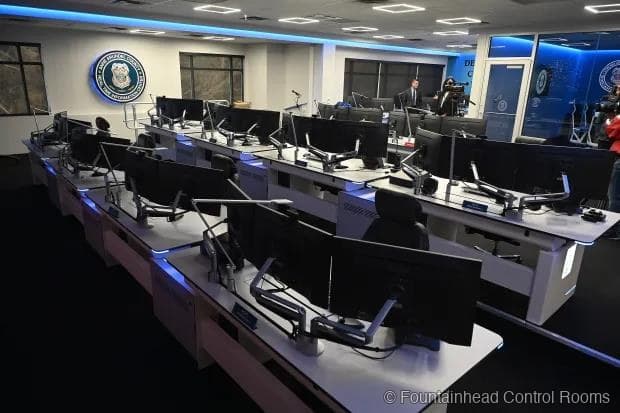
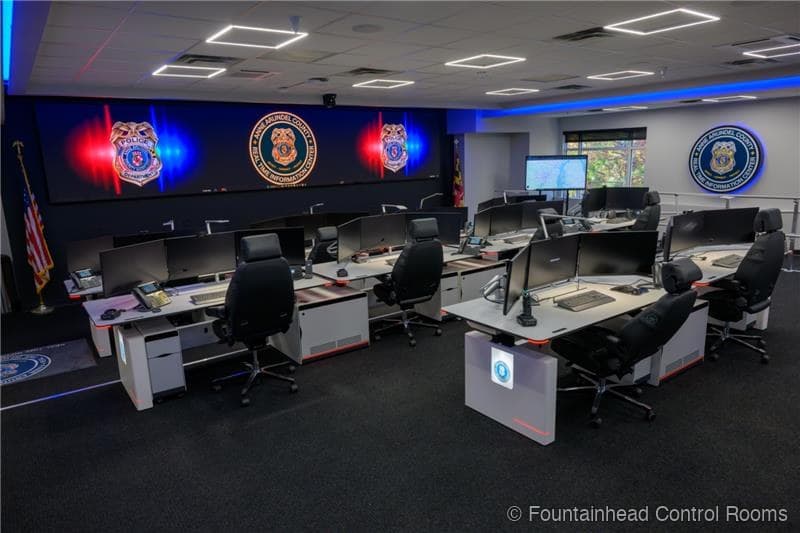
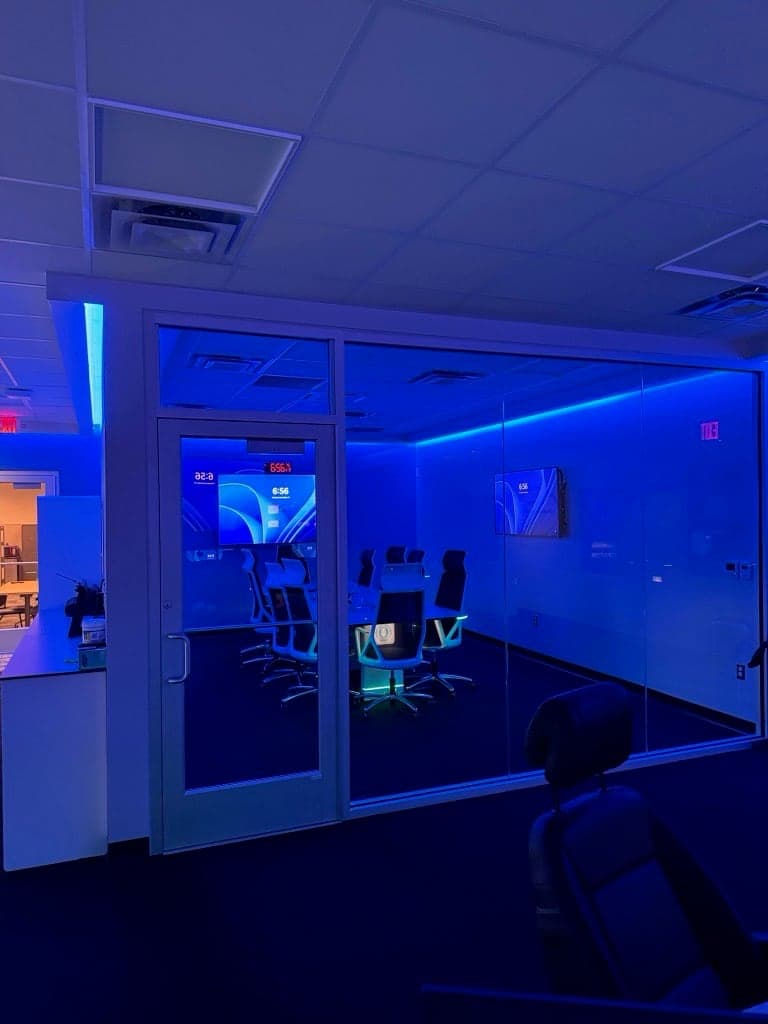
A purpose‑built control room layout that supports sightlines, collaboration, and rapid decision‑making.
24/7‑rated consoles and technical furniture designed for ergonomics and long shifts.
A shared video wall and integrated AV/control systems that give everyone in the room a single, real‑time operational picture.
Behind the scenes, Fountainhead integrated multiple layers of technology into one cohesive environment, including:
Real‑time situational awareness platforms.
Countywide CCTV and other security cameras.
ALPR systems cameras.
Computer‑Aided Dispatch (CAD) data.
Body‑worn camera video.
Records systems and investigative databases.
Data analytics tools that help analysts see trends and patterns.
RTIC staff can monitor live video, review recorded footage and use license plate reader data from their workstations. They can also track crime trends and send actionable intelligence directly to officers in the field.
Read the full case study
Outcomes: Measurable crime reductions and operational wins
In just its first full year of operation, Anne Arundel County’s Real‑Time Information Center has contributed to both tactical wins and major shifts in county‑wide crime trends. Police Chief Amal E. Awad calls the RTIC “21st‑century innovative, smart policing at its finest,” emphasizing that it gives officers immediate access to critical, potentially life‑saving information.
In 2025 alone, RTIC‑linked work and integrated technology helped:
Recover more than 2 million dollars in stolen vehicles.
Arrest wanted persons and support drug investigations.
Locate missing individuals by combining live video, ALPR hits, and investigative databases.
County crime statistics for 2025 show major double‑digit drops across several categories:
47% decrease in citizen robberies.
46% fewer commercial robberies.
30% reduction in stolen autos.
27% drop in carjackings.
Significant declines in both contact and non‑contact shootings.
Police leadership credits proactive strategies powered by the RTIC, an expanded ALPR network, and a growing drone program as major drivers of these reductions.
Anne Arundel RTIC History and Purpose
Anne Arundel County’s Real‑Time Information Center formally opened on February 4, 2025, inside a secure facility in Millersville, MD. The county invested approximately 1.5 million dollars in a 1,300‑square‑foot, state‑of‑the‑art space focused on public safety, crime prevention, and emergency response.
From day one, the RTIC was designed to be:
A central hub for aggregating real‑time information from across the county.
An analysis center where trained staff can turn raw feeds into actionable intelligence.
A force‑multiplier that improves both officer safety and investigative outcomes in the field.
By the time the center opened, its early pilot work had already demonstrated its impact, including support in at least 200 incidents such as the Glen Burnie stolen‑truck case.
How the RTIC was funded and equipped
To bring the Real‑Time Information Center to life, Anne Arundel County leveraged state and local funding along with grant support.
Key funding and resource highlights include:
Primary funding from the Maryland Office of Crime Prevention & Policy’s Byrne Justice Assistance Grant, which supports RTIC development statewide.
Additional technology—especially automated license plate reader (ALPR) cameras that integrate directly into the RTIC—funded through police budgets and complementary grants.
Continued investment in networked cameras, software platforms, and data systems that allow analysts to correlate live activity with historical information.
This combination of grants and budgeted dollars allowed the county to build a modern RTIC without compromising on mission‑critical functionality or long‑term scalability.
Maintaining public trust: Privacy, policy, and governance
From its earliest planning stages, Anne Arundel County leaders understood that expanding video and data capabilities would raise important questions about privacy. The RTIC operates under a formal privacy policy that governs exactly how technology and data can be used.[1]
Core elements of the RTIC’s governance framework include:
A requirement that all technologies and datasets are used ethically, lawfully, and only for legitimate law‑enforcement purposes.
An explicit prohibition on using facial recognition on RTIC video feeds.
A commitment not to routinely monitor community‑shared or residential cameras; participation in Community Connect and camera‑registry programs is voluntary, and business owners’ control which cameras are viewable and when.
A clear rule that residential cameras are never accessible as live feeds—video is only requested after an incident occurs nearby.
Strong data protections, including strict access controls, high security standards, and regular audits.
These guardrails help the county balance powerful new capabilities with community expectations for civil liberties and responsible technology use.
Why the Anne Arundel County RTIC matters for other agencies
Anne Arundel County’s Real‑Time Information Center is emerging as a model for how counties and mid‑sized jurisdictions can blend technology, privacy safeguards, and thoughtful control‑room design. The county invested in a well governed, purpose built RTIC rather than simply adding more cameras. This gives analysts and officers a space where they can see the complete operational picture at once.
For agencies considering a Real‑Time Crime Center (RTCC) or Real‑Time Information Center, Anne Arundel’s approach highlights several takeaways:
Start with community context and specific public‑safety challenges, then design technology around those needs.
Pair grants and local funding to build a scalable center instead of piecemeal solutions.
Put strong privacy policies and governance in place from day one to maintain public trust.
Treat the control room as a mission‑critical environment where furniture, layout, and AV integration are as important as the software stack.
Ready to build your own RTCC or RTIC?
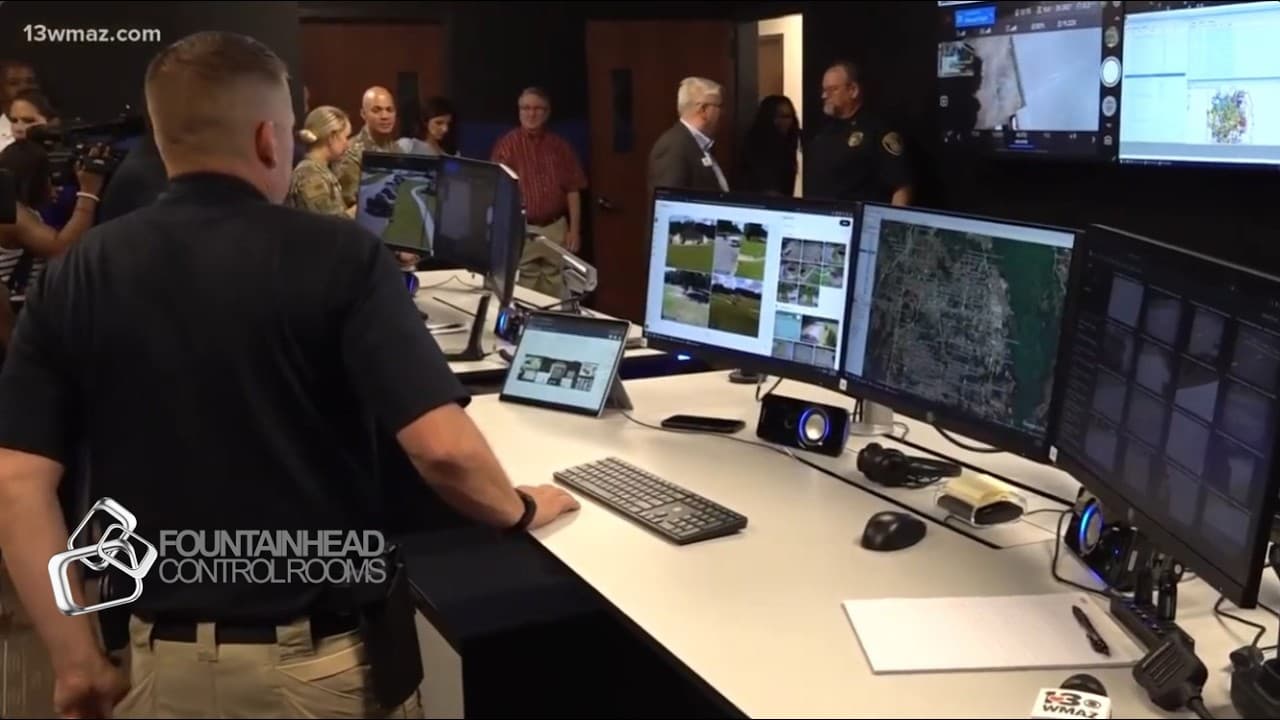
Fountainhead Control Rooms helps law‑enforcement agencies, counties, and cities design and build Real‑Time Crime Centers and other mission‑critical operations spaces across the United States. From Anne Arundel County, MD to Warner Robins, GA and Spokane County, WA, the team delivers end‑to‑end control‑room solutions that improve situational awareness and outcomes.
If you are exploring a Real‑Time Crime Center, Real‑Time Information Center, or public‑safety command center, Fountainhead can help you define requirements, design the room, and integrate the technology stack so your analysts and officers can make better decisions, faster.
Project Video
See It in Action
Project Gallery
Inside the Facility
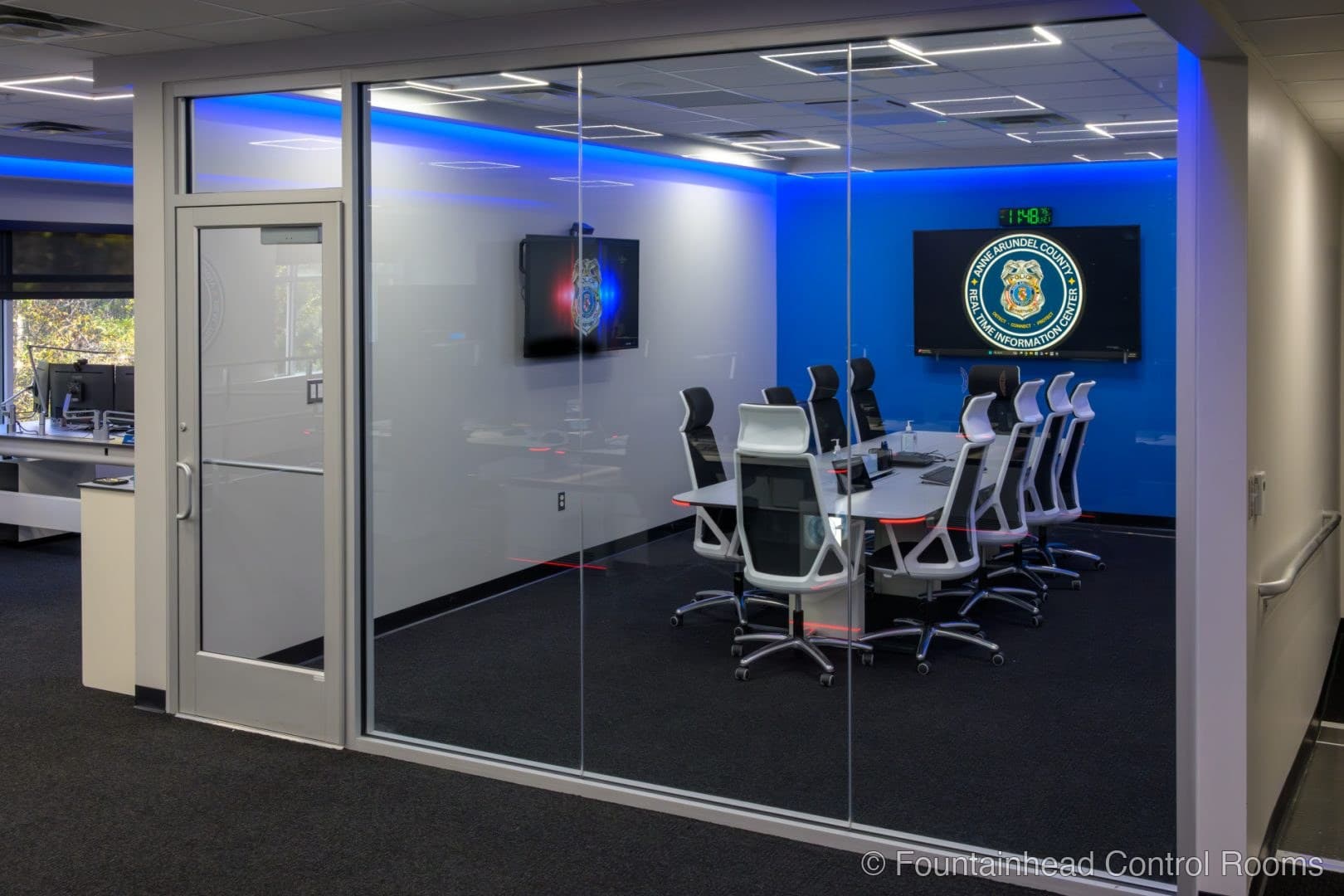
21st-century innovative, smart policing at its finest.
Amal E. Awad
Police Chief, Anne Arundel County Police Department
Ready to Build Your Control Room?
Request a same-day consultation by calling us at 404.990.3748 or click below.
Related Projects
More Case Studies
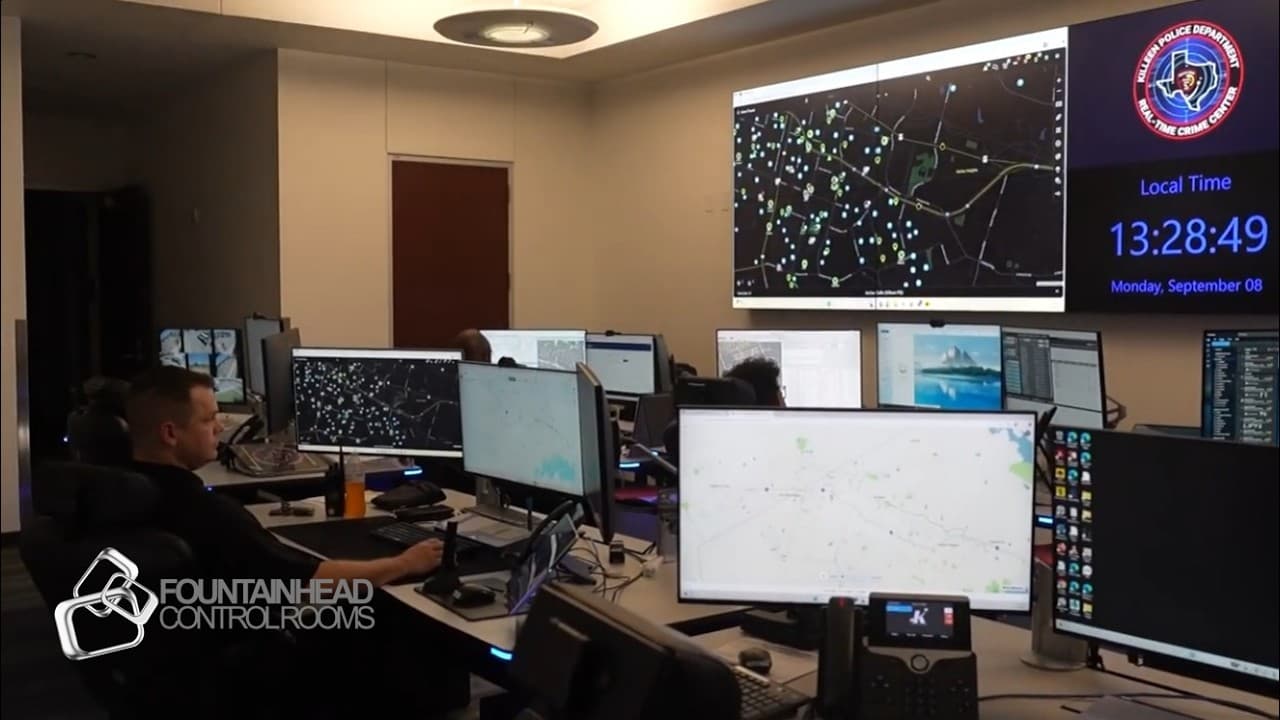
Killeen Police Department
Killeen, Texas
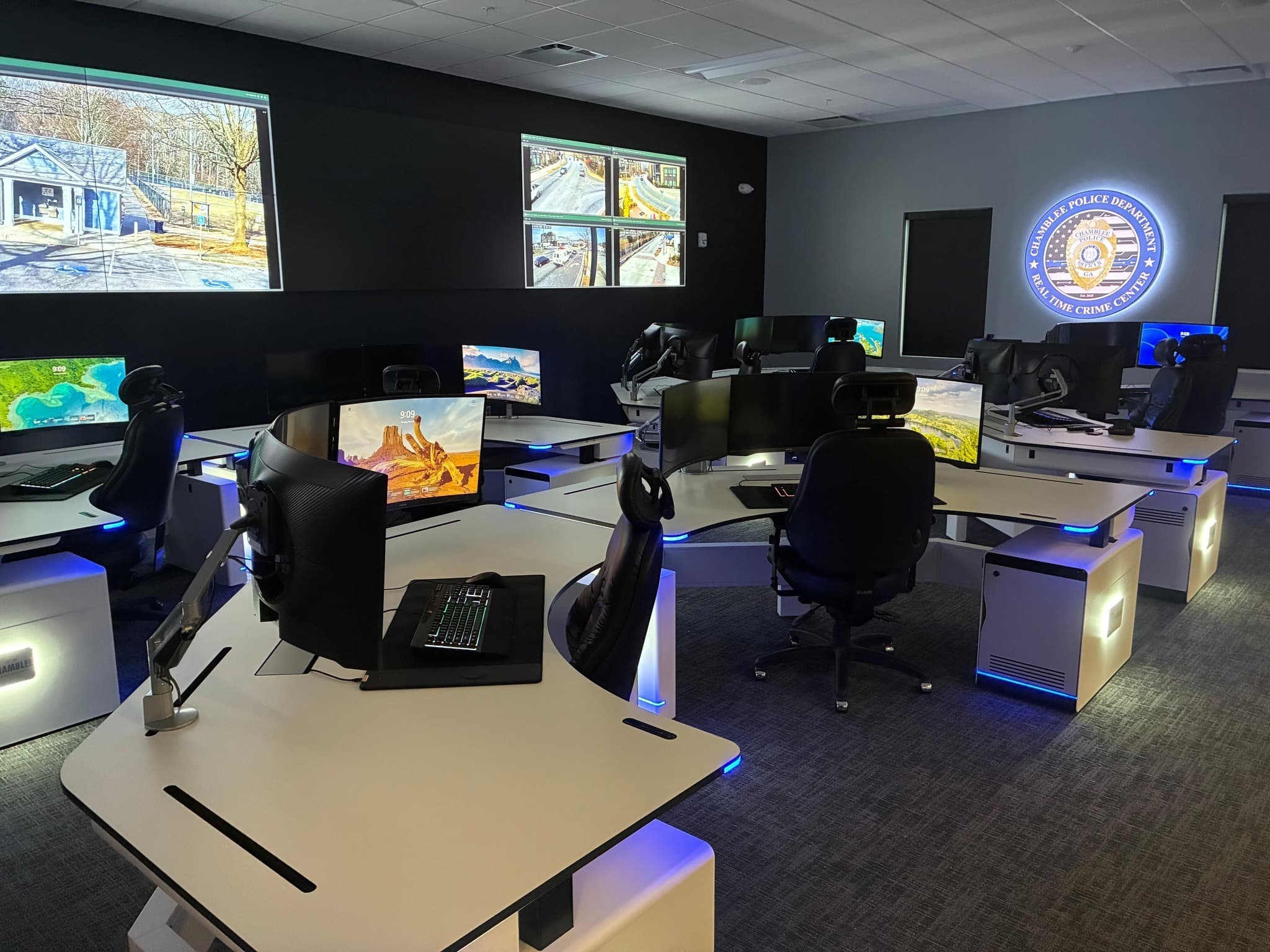
Chamblee Police Department
Chamblee, Georgia

Spokane County Sheriff's Office
Spokane County, Washington
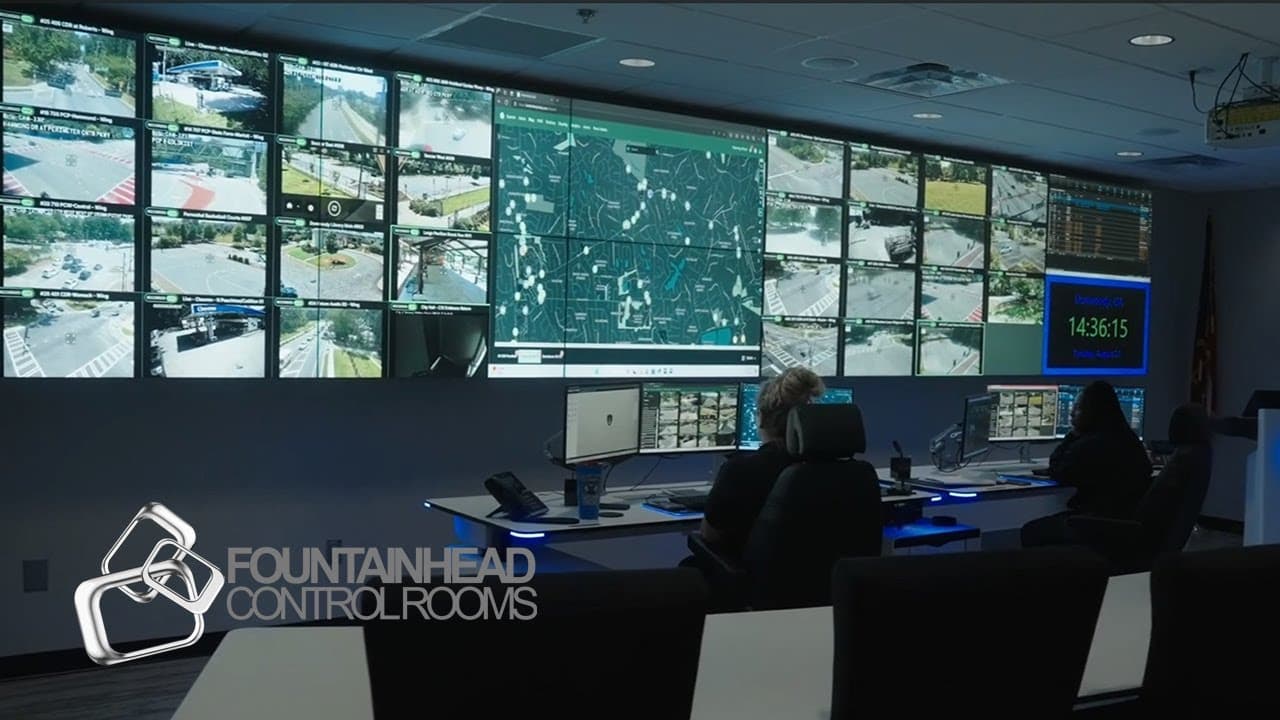
Dunwoody Police Department
Dunwoody, Georgia
Gastonia Police Department
Gastonia, North Carolina
Warner Robins Police Department
Warner Robins, Georgia